
The Top Experts Reveal Small Business Marketing Strategies
That Get Results In This Economy

More Small Business Marketing Books, Ideas and Newsletters

By Charlie   |   March 17th, 2010

Marketing Books by marketing gurus
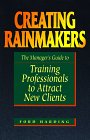
Creating Rainmakers: The managers guide to training professionals to attract new clients -Ford Harding
A textbook for business development. It includes a number of unusual ground breaking concepts to help you and your sales staff become rainmakers, people who generate high levels of profits for your firm. Harding dispels numerous business development myths and describes common mistakes made by sales and marketing managers. This book is the bible of lead generation.
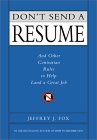

Don’t Send a Resume: And other contrarian rules to land a job– Jeffrey J. Fox
Jeffrey wasn’t thinking of marketing your business when he wrote this book, just of ways to get attention as a job applicant. But his approach used as a marketing strategy, can produce astounding results. Jeffrey maps out his guerilla approach to getting a job and it turns out it works just as well for growing your business. Short and sweet.


Designing Web Usability: The practice of simplicity– Jakob Nielsen
This easy to understand book is packed with ideas on how to build web sites to achieve your communication objectives. Don’t expect to find out how to design the latest cool feature; instead, this book uses research and Nielsen’s well-founded insights to explain what works. Designing web sites is easy. Designing web sites that move people to the action you want them to take isn’t. Anyone who has a web site, and especially people who design them should keep this book next to their computer.


Getting Everything You Can Out of All You’ve Got: 21 ways you can out-think, out-perform, out earn the competition– Jay Abraham
Abraham is a marketing genius and one of the great marketing thinkers of all time. As you can tell from his title, Jay is inclined to hype, but beneath this is sound advice. Jay focuses on the big ideas which can dramatically increase your profitability. Provocative and content rich. Lots of great stories to stimulate your own business development thinking. A veritable gold mine for any business leader or owner.


How Customers Think: Essential insights into the mind of the market – Gerald Zlatman
What are your customers thinking? Most firms don’t know, as evidenced by the fact that 80% of new products fail in the first six months. Harvard professor Zaltman shows you how to understand your own predispositions and biases as compared to how the minds and memories of consumers work. A clever book full of insights you can apply to your marketing. You’ll need to read it carefully and use your imagination to get the most out of this book, but if you do, your marketing will be light years ahead of your competitions’.

Books on Creativity – Keep new ideas flowing to stay ahead

Thinkertoys (A handbook of business creativity)

– Michael Michalko
A practical guide to stimulate creative thinking and problem solving. Full of exercises to use for brainstorming with your staff or your clients. Includes over a hundred innovative tools that any business person can use to solve problems and come up with new ideas. Read a few pages every day, and try one of the exercises once a week to keep your creative ideas flowing.
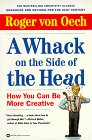

A Whack on the Side of the Head- How you can be more creative – Roger Von Oech
32 “whacks” or eye-opening exercises to spur creative thinking and help you see problems from a new perspective. Roger identifies ten barriers to creative thinking, including”the right answer, that’s not logical, follow the rules, be practical, play is frivolous, that’s not my area, avoid ambiguity, don’t be foolish, to err is wrong, and I’m not creative”. A chapter on each helps you unlock your and your colleagues’ creativity. These ideas are useful whether you’re in business or in school.
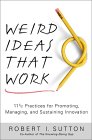

Weird Ideas that Work: 11 1/2 practices for Promoting, Managing and Sustaining Innovation – Robert Sutton
You might think Robert is nuts until you discover that this Stanford professor is describing ideas from real-life case studies. This book will turn many of your stereotypes of what works on their heads. Sutton’s ideas are unorthodox and thought provoking. No ivory tower theories here, but actual examples pulled from companies like Handspring, 3M and IDEO. Weird? Maybe. Practical? Definitely.


Why Didn’t I Think Of That? Think the unthinkable and achieve creative genius – Charles W. McCoy Jr.
Instead of using a band aid approach to problem solving, McCoy shows how to apply systems thinking to increase creativity. This engaging book is full of anecdotes and addresses issues of perception, concentration, high-level thinking, a systematic approach, imagination, intuition, empathy, and anticipation. Use McCoy’s systematic approach to creativity to become a top quality thinker. A fun read too.

More Marketing Books and Newsletters – To Be Reviewed

The 12 Month Millionaire
By Vincent James
https://www.12-Month-Millionaire.com

Why We Buy
By Paco Underhill
https://www.envirosell.com

Words that Sell
By Richard Bayan

Millionaire Mind
By Harv Eker
https://www.MillionaireMind.com

Become the Obvious Expert
By Elsom Eldridge, Jr
https://www.obvious-expert.com

Little Red Book of Selling
By Jeffrey Gitomer
https://www.gitomer.com/

How Millionaires Stay Rich Forever
By J.M. Trippon
https://www.trippon.com/

Never Run Out of Cash
By Philip Campbell
https://www.NeverRunOutofCash.com

1001 Ideas to Create Retail Excitement
By Edgar Falk

Ultimate Guide to Direct Marketing
By Al Lautenslager
https://market-for-profits.com/

Guerilla Marketing In 30 Days
By Al Lautenslager
https://market-for-profits.com/

Sales Question that Close the Sale
By Charles Brennan

Knock-Out Marketing
By Jack Ferreri

Your Marketing Sucks
By Mark Stevens
https://www.YourMarketingSucks.com

Negotiate Your Way to Riches
By Peter Wink

Phrases that Sell
By Edward Werz and Sally Germain

Selling to Big Companies
By Jill Konrath
https://www.SellingtoBigCompanies.com

eBooks

Emergency Cash Generators
https://www.EmergencyCashGenerators.com

Landing Page Handbook
By Marketing Sherpa
https://www.SherpaStore.com

The Ultimate Success Secret
By Dan Kennedy
https://www.DanKennedy.com

Newsletters

Marketing Hotsheet
By Ankesh Kothari
https://www.MarketingHotsheet.com

The Online Marketing Letter
By Jonathan Mizel
https://www.MarketingLetter.com

List and Traffic
By Jimmy Brown
https://www.ListandTraffic.com

Magazines

Millionaire Blueprints
By Tom Spinks
https://www.MillionaireBlueprints.com

DM News
https://www.DMNews.com

Target Marketing Magazine
https://www.TargetMarketingMag.com


Exceptional Small Business Marketing Strategies For Overachievers

By Charlie   |   March 17th, 2010

Only a few people ever take their businesses to the top with their small business marketing. Want to be one of to be one of them?

The people who make it to the top aren’t just lucky: they’re overachievers. Business owners who make a fortune for themselves and can afford to take months off to vacation in exotic places aren’t like everybody else. They think and act differently!

I’m talking about clients of mine like Julie, who built her home health care business from scratch and then turned down an offer to sell it for six million dollars. She knew she still hadn’t grown her business to its potential. She knew that improving her marketing strategy would help build her business’s worth to nine million dollars.

Then there’s Larry, a real estate investment coach who has seen his income jump from $100,000 last year to ten times that this year.

Or Jason, another client who owns an Internet business providing training books and audio cds. His annual sales will pass four million dollars this year and Jason sees huge potential. He wants to increase this by another million next year.

Want to know the small business marketing secrets to becoming an overachiever? Want to think and act like an overachiever so you become one?

Before you read any further, I want to warn you that the ideas and marketing strategies in the rest of this article may not be for you. But if you’re one of those rare people who wants to truly be the best in the business, to stand head and shoulders above your competition, then read on.

What hold’s most small business owners back?

It’s not because they’re not smart enough, don’t work hard enough or lack opportunities. The problem is that their small business marketing isn’t focused on what works and they lack the small business marketing skills and knowledge to take their business to the next level.

What’s The Difference Between Overachievers and Underachievers?

Overachievers Have a Different Mindset
Every business owner makes their fair share of mistakes and overachievers may make even more than most. The difference is overachievers aren’t worried about making mistakes. They use each as an opportunity to improve their business.

For example when you run an ad that doesn’t generate a response, what do you do? Do you blindly run it again and hope it’ll work the second time or do you give up on using ads? Or do you hire an expert to show you how to use your ads to get 2-20 times the response? The latter is what overachievers do.

Want to be truly successful? Would you like to be considered for my marketing mentoring program? Use this link to apply >>

Overachievers Focus On Winning Instead of Not Losing
One of the biggest barriers for most businesses is they’re focused on not losing, instead of on winning. There’s a big difference. It’s the difference between looking down and going forward, watching your feet and looking up to see where you are going.

Karl Wallenda, the famous tightrope artist, was once asked if he thought about falling as he balanced on the wire hundreds of feet in the air. His response was that the moment he started to think about falling, it was time to retire.

Overachievers have the same mindset as Karl Wallenda. Instead of worrying about failure, they focus on moving their businesses forward.

Overachievers Develop Their Skills and Confidence
One of my favorite examples of an overachiever is client Donald Monroe, a plumbing contractor in Richmond VA. What comes to mind when you think of plumbers? The stereotype is of a heavyset guy who is hard to get a hold of and even harder to get to your house. When he finally does come to do the work, he and his assistant leave a big mess behind.

You don’t usually think of plumbers as seeking out marketing advice and marketing ideas but Donald had a larger vision of what his plumbing business could become. He decided to re-think plumbing contracting and service and create a new model based on fast, friendly service provided with white glove cleanliness. To make his business the best he is constantly seeking new ideas and strategies for marketing it.

When Donald found my small business marketing materials, he bought them all and them put them to work to see what would happen.

Focusing on winning instead of losing is a lot easier when you know what works. The fastest way to build your confidence is to find out which ideas, which selling skills, which marketing strategy will help you be more successful.

In Donald’s case by putting these proven marketing ideas to use he grew his business by 50% in two months.

If you’re one of those rare people who wants to be an overachiever – discover how to get the mindset, skills, marketing strategies and confidence to take your business to the top. Find out how to focus your goals and marketing strategies to reach outrageous levels of success.

Use the following link to be considered for my marketing mentoring program >>


Stop Working So Hard And Start Making More This Year!

By Charlie   |   March 17th, 2010

Is working harder the way to make your business more successful?

I’m willing to bet that when you started or bought the business you’re running, you had a vision – and it didn’t include working 60 hours a week just to keep up. But many small business owners are doing just that. Are you one of them?

I’m reminded of an article I read in the business section of The New York Times some years ago about work habits of managers. Although the story is ‘pre-laptop’, the lesson still applies.

An industrial psychologist shadowed a busy executive at work for two days. Each night this executive left his office late, carrying two briefcases stuffed full of paperwork he intended to finish at home. Early each morning he returned to the office with the same two briefcases – unopened.

During the 10 or 12 hours the executive was at the office, he worked like a dog, constantly on the phone and checking on his assistant and his staff. But no matter how hard he worked, he never got to the papers in his briefcases. He was running on a treadmill and couldn’t get ahead.

When the industrial psychologist analyzed this executive’s daily routine in detail, he found that over 80% of the tasks that were keeping the executive so intensely busy could have been done, and possibly done better, by a subordinate. He was spending his time on tasks others could have done and micro-managing his employees.

Sound familiar? Are you spending valuable time each day doing work that could be delegated to an employee or outside contractor? Are you wasting time micro-managing your staff? These management habits are big barriers to the growth of your business.

Ready to discover how to get through these barriers? Get serious about reaching your business potential.  Find out how and where to focus your time >>

Small business owners wear many hats, developing products and services, marketing, managing employees and keeping customers happy. It’s easy to get sucked into solving immediate problems, answering endless email and trying to make progress on your To Do list. But as the business grows, there simply aren’t enough hours in the day for you to do both the hands-on, day-to-day management – call it the tactical work – and the goal setting and strategic work that will maintain business growth.

The executive described at the beginning of this article is a perfect example; he spent all his time on tactics, fighting fires instead of developing a strategy to keep fires from getting started in the first place.

Are you focused on doing the daily work instead of on growing your business? You can be the business or you can run your business, but as your business expands, you can’t do both.

Want an easy to implement system to grow your business exponentially? Discover a simple strategy for attracting more clients each month. Use this link to pick up a copy >>

How can you shift from being the business to running your business? Try this for starters:

When you start your day tomorrow, don’t look at your To Do list. Before you even check your email, make a NOT To Do list. That’s right; list all the things that you, as the owner of the business, should not be spending your time doing.

Now make a second list of the tasks and projects that will require or benefit from outside expert help.

Third, list the tasks or projects that only you, with your talents, brains and experience can do and want to do.

Here’s a short sample to give you the idea:

NOT To Do (Tactical work to delegate to others)

  • Sort and respond to most emails
  • Deliver products and services
  • Make sales calls
  • Follow-up with prospects and customers
  • Web site management

Use Experts To Do (Things your company doesn’t have sufficient in-house time, experience or expertise in these areas)

  • Taxes and accounting
  • Developing marketing strategy
  • Copy writing
  • Layout and design of marketing materials
  • Legal advice

Only I Can Do (Short and long-term strategic planning)

  • Development of vision
  • Creation of strategy
  • Oversight of strategy implementation
  • Management
  • Contact with your most important clients
  • Reviewing the numbers and direction

Ultimately the success of your business will be determined by the role you play in it. Get a handle on your time by checking your Not To Do list daily and focus on the strategic tasks that will help you lead your business to the top!

Ready to find out how much more successful your business could be? >>


Are Your Small Business Goals The Right Ones?

By Charlie   |   March 17th, 2010

“Last year I made $170,000 with my business, working on it part time. I want to make more this year and I have a ton of ideas for products and services, but I every time I think about working on them I lose interest. What can I do to regain my focus and make more with my business?
– Chris

Chris is one of my clients, and when I asked him what his personal goals were, he hesitated and the admitted he didn’t really know. He knew he wanted to make more money so he could confidently quit his day job, but didn’t have a clear vision of where his business was headed.

Without a doubt Chris has been reasonably successful but he’s only tapping part of his potential as an entrepreneur, and he knows it. With his small business ideas and talents, he could be making $750,000 or more, but he’s stuck. What does he need to do be outrageously successful?

No matter how brilliant you are, no matter how successful you’ve been, without a vision of what you want to do with your business and without defined goals to achieve that vision, I can guarantee you’ll wander.

If you’re not making money or not making as much as you’d like to be, the solution could be as simple as clarifying your vision and rethinking your goals.

Say you really wanted to go on a vacation but had no idea when, where or with whom. Chances are that you’d end up just taking a few days off and staying home or hitting the local golf course for a few rounds. Okay, but not great.

Now, imagine you wanted to take the ultimate vacation with a friend or your spouse. You’d make a list of places you want to go, what you’d like to do and see, and the level of luxury you’d like to enjoy. You’d create a vision of your trip.

Then you’d start to make plans, setting dates and making reservations. Of course, this trip would cost much more than a few rounds of golf, so you’d start figuring out how you could make enough money to afford it.

My wife and I have been talking about taking a trip to Bhutan for years. But it’s a vague wish rather than a clear vision; we’ve never figured out when we’d go or what we’d do. At this rate, we’ll never get there.

Having a vision of what you want to do with your business is the starting point. If you just want to make more money, there are hundreds of ways to do it. You have to know where to focus.

Want to know how to focus your online marketing efforts so you can achieve your ultimate income potential?  Use this link >>

Are you thinking of adding a few more clients, or are you planning to be the top investment adviser (or whatever) in your state? Do you market online?

Are you wondering how to add an additional revenue stream, or are you could be planning to develop five new niche info products, each making you over $250,000 a year? Do you see your business becoming the dominant player in your industry or in your town? What do want your role to be?

Want to know the fastest way to grow your small business? Find out what works from an expert who has done it already.

Several years ago I set myself the goal of making my business not only more profitable, but portable, so I could run it from any place that had broadband Internet access. This past December my wife asked me how many days of skiing I wanted to do that winter. I actually hadn’t pinned down a number until that point, but I told her that getting in 30 days on the slopes would be awesome.

When the snow finally started finally falling in late January, my business was set up so I could work from our condo in Vermont. I’m happy to say I reached my goal of 30 days of skiing, and continued to grow my business.

What is your vision of success?

What do you want to accomplish this year? In three years? In five years?

What are your top three goals for this month?

Like my client Chris, articulating a vision for your small business will focus your thinking. Then it will be easier to set specific goals and make plans to achieve them. Keep track of your progress, regularly update your vision and your goals, and you, too, can become outrageously successful.

If you’re serious about growing your business you know that to take it the next level you’re going to have to something differently than you are now. Ready to discover what? Use this link >>


3 Easy Ways to Make More With The Same Clients

By Charlie   |   March 17th, 2010

An accountant once told me that he never met anyone who didn’t want to make 30% more money. Whether you want a better lifestyle or to take more vacations, buy a fancy car, spend more time with your family, send your children to college or to give it all away, you could always use more money.

If you sell services, your primary limitations on earnings are your costs and the number of hours in a week. Most independent professionals are already working well over 40 hours a week and can’t work longer hours to increase earnings. Your goal should be to find a small business marketing strategy that enables you to work less and increase your earnings. How can you market smarter and make more money?

Don’t Discount Your Services
Have you ever heard of a lawyer or carpenter offering a 20% discount on their hourly or daily rate? Every time you offer a discount or reduce your regular rates, you are sending a message to prospects that your services really aren’t worth what you’re asking.

Once your clients know that your prices are discounted or negotiable, you will always be fighting a battle to be the paid full price for your work. Never offer discounts; your clients will assume that they are expected to pay the asking price for your services.

Is your marketing and sales strategy helping you earn as much as you’d like? Does your marketing plan help you generate hundreds of prospects a week and help you convert them to paying clients? Are you getting the results you want from your marketing?

Define the blueprint for a profitable web site. You’ll learn the sales / marketing strategies and tactics that can help you grow you online and offline business.

Overcome Objections To Price
Prospects invariably want to know your pricing before they understand the benefits your products and services provide. Quoting prices is meaningless until prospects can put the cost into the context of the results they can expect.

When prospects show concern about your pricing, it’s a good sign. It indicates their interest in buying your services and a need to understand the value you provide. You could list all the benefits of your services but if you really want to make the sale, it’s far more effective to let prospects sell themselves.

A client’s perception of value isn’t based on how much they pay, but on whether their expectations will be met and the benefit they will receive. Don’t get stuck on the dollars you charge per hour. Instead help prospects define the dollar benefit of your services.

When prospects query you on price, respond by asking questions to help them identify for themselves the problem they want solved, the cost of the problem, the solution they need, and how you can help them. Prospects buy when they think their expectations will be met. Let them define their expectations and they’ll be far more likely to sell themselves when you finally explain your pricing at the end of the conversation.

Position Yourself as an Expert

Differentiate yourself from your competition by using your articles to regularly provide insight and ideas to your prospects and clients so they come to view you as an expert in your field. Use expert positioning and consider raising your prices.

When Arnold Schwarzenegger first arrived in the U.S. he had trouble getting work as a stonemason with his funny accent, despite charging less than his competitors. A friend suggested he set his prices above the competition and bill himself and his partner as exclusive European masons. His business took off and look where he is now!

Learn how to increase sales with your internet marketing strategy. Use the step by step sales & marketing system in “Creating Web Sites that Sell” to get attention, position your products and services and to sell more.

Use this link to order your copy of Creating Web Sites that Sell.

Avoid Hourly Fees
Unless you sell hour-long massages, charging by the hour is the best way to limit your earning potential. When you charge by the hour you lose money if you work efficiently or if you get a great idea right away. Prospects can always negotiate with you on the number of hours they want, undermining your ability to put in the time needed to meet their
expectations.

Prospects want results. Help them clarify the results they want and then set a project fee for accomplishing those results. Make sure your contract or letter of agreement allows you to adjust your price if the project changes mid-stream.

Use Value Based Pricing
You can pay $30 or over $5,000 a night for a motel or hotel room. Both provide a roof over your head, a bed and your own bathroom, so why do some people pay over 150 times more for one than the other?

People buy based on their perception of the value provided. If they understand the value that your service or product provides, they may be willing to pay much, much more than you are currently charging. Look at the results you provide for clients and reassess your pricing.

Leverage Time and Money
Like most service professionals you have limited time and money to spend on marketing. Much of your time is spent delivering services. Is your small business marketing helping you earn more? Do prospects understand the unique value you provide? If not, take a look at the way you are positioning your firm and adjust it to clarify your value to clients.

Are you making what you could be? If you apply even one or two of the above strategies, you’ll be making more money than you are now without working any harder. You’ll probably still wish you had 30% more.


Small Business Web Site Marketing Ideas & Tips

By Charlie   |   March 17th, 2010


How To Position Your Product For Success Before It Exists

By Charlie   |   March 17th, 2010

You have an idea for a new product or service, want to get feedback from prospects and position your firm as the experts. How do you do this when you haven’t ever provided the particular service or sold the product?

Let’s say you are in the planning stages of starting a collection agency. (Your clients could be lawyers, building contractors, clothing manufacturers, etc.) How do you find out what your potential clients want and position your firm for future sales?

Even if you don’t have a fully defined service you can still demonstrate your expertise through the quality of the questions you ask. No one knows all the answers and bluffing is a poor way to build a business. Use questions to prompt prospects’ thinking. Then use your expertise to synthesize common problems and solutions and prospects will be impressed. While your products and services are the vehicles that will earn you money, your expertise is what will help you become a trusted adviser and service provider.

Learn how to position yourself and your business for success >>

Establish yourself as an expert and increase credibility. Learn how to write your articles and where to distribute them with ‘Opening Doors with Your Articles

If you don’t know what your prospects want, ask them. Put together a list of ten to twenty-five questions. Avoid using “either or” types of questions and create a list of open-ended questions which encourage prospects to discuss their collection concerns. Ask questions to clarify common collection problems, their importance and what prospects want to do about them.

Now that you have your list of questions, whom do you talk to? If your target market is lawyers, start with your own lawyer, friends’ lawyers and use networking to grow your sample to fifteen to twenty attorneys.

To build credibility be direct about what you are doing. Tell the people you want to meet with that you are researching a new service and want to learn more about their collection problems, concerns and strategies. While this may not sound like the greatest opening line, most people like to talk about themselves and appreciate it when others show an interest in their problems.

Let them know that when you complete the research phase, you will distribute a summary of your findings to them. Its much easier to get people to give you 20-45 minutes of their time if you aren’t trying to sell them but approach them looking for advice.

When you are done with your interviews, write a summary of the common problems and strategies you identified. Don’t forget to include a section in your report that describes how your services will solve these.

Using this research/ positioning strategy you can:
– Refine your product or service idea to meet prospects’ needs
– Create content for articles to publicize your knowledge
– Establish yourself as the expert

Having the perfect product or service to meet your target market’s needs is a plus but it won’t guarantee a sale. Establishing yourself as the expert, one who knows and understands their concerns will help to pull in clients. Whether you are researching a new service or want to ramp up sales for an existing one marketing your expertise to sell your services is a great way to make use of strategic marketing.

Use your articles to establish yourself as an expert and increase credibility. Learn how to write your articles and where to distribute them >>


Should You Give Up On Cold Calling as a Small Business Marketing Tool?

By Charlie   |   March 16th, 2010

Ever had second thoughts about using cold calling to find new clients?

Before you pick up the phone to make a single cold-call, there are several things you should know. First, few people are naturally successful at cold calling.

Second, cold calling has a bad reputation. Most people find cold calls intrusive and obnoxious.

Third, conversion rates for cold calls are typically about 2%, compared to 20% for solid leads and 50% for referrals.

With three strikes against cold calling, shouldn’t you cross this marketing strategy off your list once and for all? No! The reason most cold calls fail is simply because they’re done wrong.

If you’re thinking of giving up on using the phone to generate leads, first ask yourself if it is cold calling that annoys people, or the way its done. Don’t throw the baby out with the bathwater — many businesses have been built on the basis of successful cold-calling campaigns.

Ready to find out how to avoid small business marketing that kills sales? Get your prospects to sell themselves on your products and services. Get the details >>

One of my clients, Steve, confessed that he didn’t want to be bothered with most marketing activities. Give him a list of leads and a phone and in a couple of hours and he could find a warm prospect. Instead of alienating prospects, his cold calls resulted in more business.

Cold-calling worked for Steve because he was a master at it. You too can become a master of cold calling when you know how to prepare and how to make the calls using the strategy detailed below.

Why Do People Hate Most Cold Calls?
We’re all assaulted by hundreds of advertising messages each day. Many we choose to ignore, a select few catch our interest. The ones that annoy us the most are the ones we are forced to pay attention to without any choice. If you want to overcome this natural resistance you’ll need to find out how to make your cold-calls less intrusive.

Get Your Prospects’ Permission
One of the most effective ways to generate a lead on your website is to ask a prospect to give you his or her email address and then, with their permission, send them ideas and information they want. The same is true when you pick up the phone to call a prospect. Get a prospect’s permission, give them the information they want, and you can generate a warm lead and a sale.

The traditional approach to small business marketing and cold calling shoves a  ‘sell’ in the prospect’s face. Most people don’t respond well to this.

The more effective alternative is to get a prospect’s attention, ask permission, find out what they want and then give them what they asked for.

Discover how to increase your confidence and competence in using the phone to grow your business. I wrote these small business marketing tools to show you how to avoid common marketing mistakes and how to apply simple marketing principles and techniques to attract a steady stream of clients. Get the details >>

How To Generate Leads and Sales with Your Phone Calls

Before you make the call; prepare for success

1. Don’t blindly pick up the phone and except to get results. When at all possible, research your prospects’ needs. The more you know about what they want the more effective you’ll be on the phone. Depending on who you’re calling, you can:

– Research the individual company and person to identify problem areas where you could be of assistance. Send a letter or a series of postcards in advance of your call.

–  Use a response form on your web site or a postcard to prompt your prospects to tell you what they are looking for. On the form, ask the prospect to tell you what his biggest or most intractable problem is.

When a prospect completes an inquiry form on your web site, you’ve got the most important thing to a successful call; their permission for you to contact them again, to discuss how you can help them.

– Survey your existing clients to define the 3-5 reasons they find your products and services valuable.

2. Your first objective with a prospect isn’t to sell to them. Before a sale can take place you need to establish rapport and find out what they want and need. If you haven’t already done this with your marketing then you’ll need to take the first couple of calls to do this and then you can move towards a sale.

Making the call –  partner with your prospect

1. State your name and ask the prospect if they have a moment. (Get their permission to continue the conversation)

2. If they’re busy, schedule a time to call back. This way you’ve got their permission to have the next conversation.

3. Give them a reason to listen. Let them know you’ll be brief and tell them why you are calling. Tell them what your firm does in terms of the benefits you provide. For example, ‘We help hotels like yours increase bookings and generate more revenue per guest.’

4. Tell them you’d like to ask them a couple of questions and get their permission to proceed. Then find out what’s working and what’s not and what types of solutions they are looking for.

5. Summarize what they’ve told you about their needs and wants. Then ask them if you could solve the problems they just told you they wanted solved, whether it’d be worth schedule at time to talk further. Next, schedule a meeting or follow-up conversation.

Advertising, web sites, email, and sales letters are great ways to market your products and services, but picking up the phone and personally talking to a prospect can get immediate results when you apply fundamental marketing principles and techniques.

Tired of trying to figure out on your own how to take your business to the next level? My clients have seen their businesses grow by as much as 200% within months of applying the principles detailed in my marketing tools. Find out how you can have this same kind of success >>


Secret Small Business Marketing Ideas For Exponential Growth

By Charlie   |   March 16th, 2010

How to Supercharge Your Blog and Flood Your Site With Free Traffic

What’s the Key to Lasting Online Success?

What’s the Best Way to Declaring Your Financial Independence

Are You Sticking to Your Marketing Plan…

How to Increase Online Sales by 15 Times or More

Who Needs a Marketing System?

Is Your Website Call to Action Helping Or Hurting Your Marketing?

3 Simple Ways to Increase Small Business Sales

Exceptional Marketing For Business Overachievers

What Not To Do To Grow Your Business

What Works Better Than Advertising to Market Your Business…

Articles Below For Distribution With Written Permission

Are Your Business Goals The Right Ones?

Should You Give Up Cold Calling to Market Your Business?

Why Most Web Site Marketing Doesn’t Convert Visitors to Buyer

… More Small Business Marketing Ideas >>


How To Cut Your Costs And Sell Up To 15 Times More

By Charlie   |   March 16th, 2010

The accepted logic is that the only way to increase sales is to spend more on marketing and advertising. For the most part this is WRONG!

It’s true if you spend more on marketing and advertising you should bring in a few more sales but wouldn’t you like to spend less and make more instead? Using just a few key ideas you can increase sales by 15 times or more while cutting your per lead costs by thousands of dollars.

How can you make your sales soar and cut your marketing costs? Here’s the story of one savvy Vice President of Marketing and his amazing success.

A couple of years ago, Steve called me looking to adopt the lead generation system I use, which was of course the system that had prompted his call. He was frustrated and looking for ideas to increase sales. His company had a professional-looking web and was spending plenty on advertising, but was getting only a trickle of leads.

Steve explained that they were spending over $750 on pay-per-click ads, but their site was generating an average of only ten leads each week. This made their per lead cost $75 or more. At that rate they were just barely breaking even.

What are your per lead costs? Want to reduce them and increase sales at the same time?

As Vice President of Marketing, Steve wanted short and long term ways to cut costs and ramp up sales. To help them jump-start sales I started by having Steve modify his home page.

First, we added a marketing message that explained the benefit they provided to their clients. After some convincing, Steve agreed to put his company name on the side of their page, in smaller type. Then, we featured their marketing message at the top of the page instead.

The results were instantaneous. Lead flow increased by 300% and per lead costs started to drop.

Do you have a brilliant marketing message that generates leads and sales at the top of your marketing material? Get one >>

Over the next couple of years, Steve and I worked together closely to implement a host of changes. Today, his company’s per lead costs are less than $20, and I know they can be reduced even further. But before I give you the steps we took to help them save over $250,000 and make twenty times that in the last two years, here’s another secret.

After the first success we had together the staff at Steve’s company were believers and healthy skeptics at the same time. Each time a change was made to the site, they checked their web logs to evaluate the number of visitors to leads generated and see if sales were increasing. If the answer was yes, the change stayed, if no then we made additional changes.

For example when we replaced the homepage copy they checked to see if more or less people were contacting them and to see which links site visitors were using. Then we worked to optimize the most highly visited pages on the site to increase lead generation.

The secret of Steve’s continued success? Measuring the effectiveness of each change and then using the past month’s results as a baseline to beat the next month.

Want to increase the conversion rate of your web site to cut costs and make sales surge? Find out how >>

So, what were the most important changes Steve made to his site, which resulted in such an amazing increase in sales?

Some changes were small, some large. Here’s the top seven:

  • Replaced the company name at the top of the homepage with a 15-second marketing message.
  • Changed the page copy on the site from a focus on the company to a focus on the client and from a focus on selling to a focus on helping.
  • Used the location of links to direct visitors to key top-converting pages.
  • Developed and offered a helpful free guide.
  • Collected and added case studies and testimonials.
  • Replaced the sign-up form with a shortened new client focused version.
  • Measured the effectiveness of each change!

Want to cut your per-lead costs and increase your sales? You can!

Whether you’re an author, entrepreneur or mid-sized company, you simply need to know how to put the marketing process in sequence and increase your conversion rates. Once you have these secrets, you’ll see your savings and your sales soar.